Havana, Cuba Experience

It was February last year and I received a text from a long-time friend's brother saying get ready we are headed to Havana, Cuba next January for his brother's birthday! The first thing I thought was all the interesting cars, people, buildings, food, and culture to see and photograph. I had never been before, yet I had heard a little about this island and seen many photos over the years. It was not going to be a photo trip, that much I knew and I was okay with it. My camera and a couple of lenses still would go along for the limited time I would have to take photos.
This left almost a year of thinking about the upcoming trip. I would tell people I was headed to Cuba, and without a doubt, the most common question I received was, "Is it even legal to travel to Cuba?!" I am here to say it is most definitely legal for a United States citizen to travel to Cuba. When people wonder if it's legal, I think it's because, over the last couple of decades, it's varied how much the United States has either tried to build bridges or limit interactions with the country. Plus, there is the decades-long embargo that has been in place. Is it as easy as jumping on a plane to go to Europe, for example? No. There is a process with a number of steps to follow, which includes getting a visa. Planning ahead of time certainly made things smoother.

Since returning, the number one question I get is what are my thoughts about the trip and country. First, I will say that I am pretty well-traveled, but I was on a trip with a number of folks who I would truly say are world travelers who have been to many more places than myself. With that in mind, we all agreed that Cuba is different than pretty much anywhere else any of us have traveled to before. The country has a rich culture, history, and beauty while simultaneously finding poverty and despair around many corners. Sometimes, the juxtaposition between these contrasting views was right next to each other. You might see a beautifully restored masonry home right next to one that has degraded to the point it looks like it was bombed. Traveling in this country, you will have the most enriching experience if you have an open mind and perspective to handle both the positive and challenging aspects of what you see.
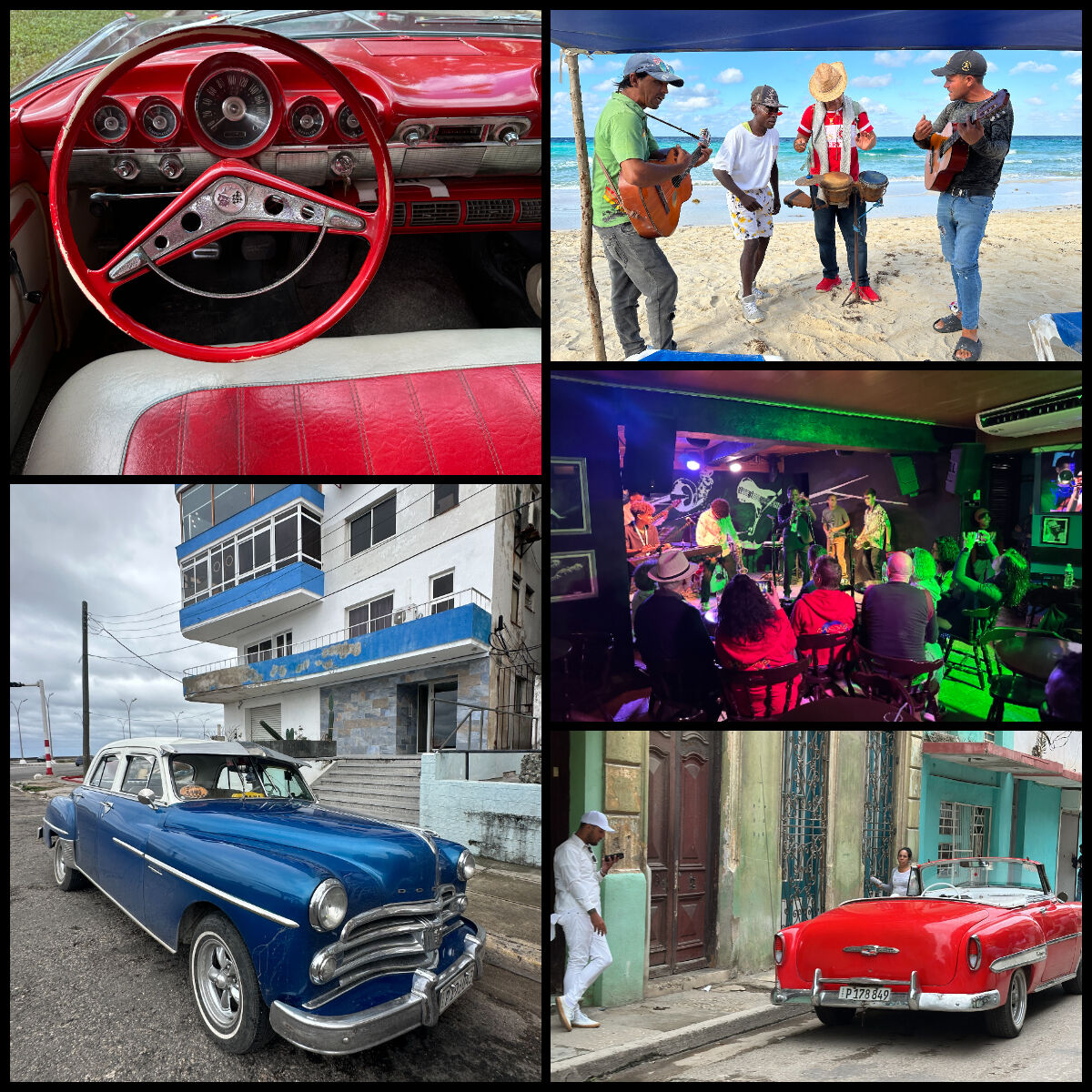
From a photographer's standpoint, this place is filled with opportunities. Let me be more specific, if you are open to photographing more than nature and landscapes. Those do exist, yet for me on this trip; it's the old gritty textured buildings, people going about their lives, restored cars (and unrestored), captivating architecture, colorful paint, abstracts of weathered structures, and more that I find the most interesting to point my camera toward. If that is your kind of photography, then you can spend days in Havana and never getting bored. There are also opportunities in small towns across the island, such as historic Trinidad with it's charming cobblestone streets, a place I would definitely like to see if I return.
When I built a new website a few years ago I debated a tagline or words in my logo relating to nature and landscapes. I chose not to do that. I do prefer to spend my time in nature, with and without a camera, but I am a photographer first, which means I will photograph whatever I find interesting, from the used cooking oil bubbles in dirty dishes to a beautiful landscape in the backcountry. Except for a couple of short drives just outside the city, most of our time was spent in Havana. This meant more street/travel photography than anything else, and I enjoyed it as it's something I don't do regularly. That said, my time photographing was still quite a bit less than most trips, yet I came home with a few that I liked. Our schedule was packed (more on this later). When out and about I did take my Canon R5 with 24-105mm f4 lens in a small top loader shoulder bag on most outings to quickly photograph scenes of interest. When not with me the iPhone 14 became my camera by default. Here is a link to the full gallery from this trip; most are from my Canon, with a few in there are from my phone.

During the course of the trip, almost everyone we met was friendly. Considering the challenging life many of them live, they are a resilient population. Making do without many things we tend to take for granted with our one-click Amazon 2-day delivery, high-speed internet connection, grocery stores with abundance, and gas pumps always full life. Searching online you will find various answers from as little as $15 USD to as much as $60 USD as the monthly average wage. Any way you slice it, this illustrates the struggle many of them endure. Despite it all, they have a reasonably optimistic view in general, at least that I saw. It's a reminder to not judge the people based solely on the government. To be fair, we had a dedicated guide and taxi drivers taking us around to nice restaurants, engaging activities, lively nightlife, etc., but it doesn't mean we were sheltered from the true life people live. It's all around and impossible to avoid not seeing and interacting with it no matter how you tour the island.

Visiting now is of course quite a bit different than the photos we see from what I will say was the roaring 1950's before the revolution. I won't go into the history here since it's lengthy, and much is already out there in books and articles. Of course, the beautiful and glamorous photos from that time don't tell it all; it wasn't great for everyone or a revolution may never have occurred. What I will say is before the revolution, there was heavy American influence and it was a popular place to go from celebrities to politicians. It's possible if the revolution didn't happen, it might be a top tourist destination. Yet things went a different direction. It's hard to know what would have been. What we have today is still very much a worthwhile destination to experience, it gives us a glimpse into what things were like. A time capsule, if you will. One of our drivers was driving the 1950's Ford Fairlane his grandfather bought at the dealership brand new! It's stories like this that show the history and culture is still present to be immersed in. That said, I also see more change is inevitable, like it is pretty much anywhere in the world as time ticks on, which means it will eventually either change into a newer modern-looking country, restored more like it's former glory, or some mix of both. I guess the pessimistic view is that it will slowly fall into ruin, but I prefer to think from an optimistic perspective. Either way, I feel now is the time to experience what Cuba offers, including its rich and interesting past.

Planning
My friend's brother was doing all the planning, and worked with a company specializing in tours for Cuba as part of the process. I enjoy planning workshops yet I admit it was nice having someone take care of it this time. While you can certainly travel there on your own without a local guide, the assistance was helpful. I wouldn't say the visa, OFAC, cash, transportation, activities, required medical coverage, cell phone, etc. process and understanding it all is complicated, yet it's a lot and I felt better off that all the boxes had been checked with ample planning and communication.
Before leaving home, I filled one piece of luggage with what I needed for the trip and a second suitcase with basic OTC medical products and school supplies that I would leave there as a donation. Some would go to an orphanage, and the rest to our local guide to disperse as needed. One of the many things you learn preparing for a trip like this is there isn't an option for locals, or tourists, to simply walk down the street to the local pharmacy or market for, say, ibuprofen—basics like that are not easily found or purchased. Not to mention, much of the population wouldn't be able to afford it. You may need something; pack it. In a way, it's kind of like packing when we head off the grid somewhere, and resources are limited.
Arrival
Once I got off the plane in Havana, I could feel right away I wasn't in America. After getting our luggage, I made contact with our local guide via text and was picked up in one of the many 1950s classic cars that are everyday driving workhorses across the island. The first thing I did once I was in the car was look for my seatbelt. Well, I guess I won't need that, I thought. Some drivers have made upgrades on these classics like alarms and remote door locks, but seat belts aren't one of them. Our drivers spoke very little English, and as someone with very little Spanish, it was nice that in our group of 10, we had several who were fluent in Spanish. That said, our amazing local guide was fluent in Spanish and English, always there to help with any communication along with other requests.

Events
I mentioned a schedule earlier. While you can technically wander around on your own, we found it helpful to have planned activities and a local guide for the majority of the time. This also helped ensure that we were following the reason why we could be legally in the country. We were there in support of the Cuban people. Our time and money would be spent at businesses and events where we learn more about the culture and history that ultimately supports the people. This included lunches and dinners at private restaurants (vs state run), a small venue jazz concert, boxing training, eBike tours, reggaetón concert, movie screening, discussion with local economic expert and entrepreneur, cigar and rum tasting, classic car tour, private art gallery tours, and more. It was a packed schedule with a lot of unique and engaging events. Oh, and the medical service is good should you need it and mostly paid for with the required tourist health insurance. How do I know? Boxing.
When we had our own time to do whatever, I would spend it walking mostly by myself down the streets near our AirBnB in the Vedado neighborhood of Havana. Despite carrying expensive camera gear around while walking on my own, I never felt unsafe. Cuba in general is safe, it has very low violent crime. Just like anywhere you travel, as long as you are smart about not leaving any easy opportunities for a low-level crime like pick-pocketing, there isn't much to worry about. I will say what surprised me almost right away was the lack of tourists. Given the climate, January is peak tourist season but you wouldn't know it with how few we saw. I guess I expected something like going to Europe in the summer. It was nothing close to that. In fact, most restaurants we ate at had plenty of seats open. Restaurants with comparable quality and service back home would be packed.
Food
This journal would be incomplete if I missed one of the best parts of the trip. The food we ate was incredible! Every lunch and dinner during the week was out at restaurants and ranged from very good to exceptional. I can't recall another trip where I consistently ate food that good for a week straight. What did we eat? I honestly can't remember the dishes but main ingredients like tuna, swordfish, lobster, rabbit, chicken, tomahawk steak and more. Veggie dishes, too. Most of the food was fresh because it was local, which I have to assume is part of the reason for how good it was. Worth mentioning in this section is tipping. Because of the low pay most people receive, tipping is very much appreciated, making a significant income difference.

General
There are some things worth noting that are different about traveling there vs many other locations around the globe. I know there are more, yet here are some that are top of mind as I write this.
- Money - It's important that you bring all that you think you will need and then double it. Why? This is a cash trip. Forget using your credit card, ATM card, debit card, etc. Those rarely work in Cuba because of the embargo, and if they do you will pay a fee. Running out of money would not be good, so I followed this rule with a stack of USD, the preferred payment. I never had to exchange for the CUP (Cuban Peso).
- Phone - Forget about that inexpensive international calling plan with your US cell carrier. It doesn't apply here. But going back in time to the days that were dollars a minute for a call or minimal data usage is what you can expect. Use your phone without a local sim card and expect your daily bill to be $500 to $1k. WiFi is available but not as prevalent as the States, and I found it not as reliable. I just happen to have a iPhone 7 lying around so I wiped it and brought with me to use as my phone with a local physical sim card for basic communication through WhatsApp and using Google maps. Touring around with two phones wasn't something I wanted, yet having one as a camera and one for communication worked well. With a local guide like we had, you don't need a locally connected phone; in fact, our guide said most groups he leads use it as an opportunity not to be connected except for Wi-Fi where they lodge.
- Lodging - One of the requirements as a US tourist is that we are not allowed to stay at state-run hotels. You can visit them, just not stay. Fortunately, due to changes over the last decade that have allowed for an increase in small businesses, there are a number of private hotels, along with Airbnb options. We had a super AirBnB hostess who helped ensure we had breakfast each morning, along with anything else we needed.
- Energy - Much of the country is still powered by large commercial diesel generators, and there continues to be a shortage of diesel fuel to run 24/7/365. Along with periodic shortages at the gas pump. Rolling blackouts are the norm for most of the country. Typically, no more than a few hours at a time, a couple of days a week. We experienced a couple of them while we were there. Overall, it did not really impact us, and for locals, it's become a way of life. Private hotels and AirBnB usually have generators to work through the blackouts as needed. Cuba is currently working on a large solar project to help with their energy shortage.

Will I return? I would like to at some point. If I do it would be either to explore with my family or as a future photography tour. Until then, I will enjoy the memories of this enriching experience and, of course, the few photos I have from the trip.
View the complete gallery of photos here.
A few more scenes from the trip, mostly from iPhone.